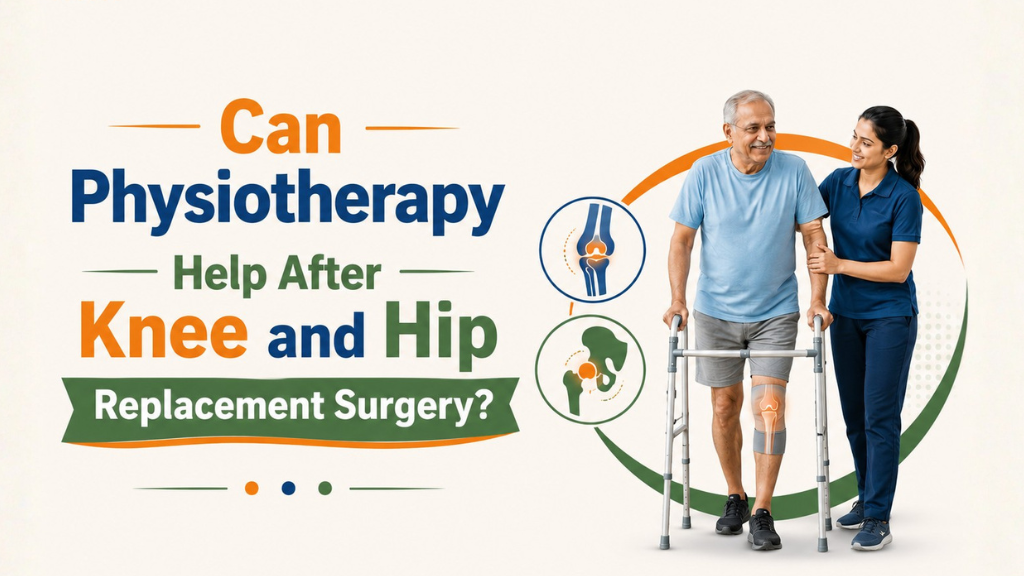
Most people think the hard part is over once knee or hip replacement surgery is done.
But honestly, recovery usually starts after that.
The pain from the damaged joint may reduce, but movement still feels different for some time. Walking feels slower. Getting up from bed feels awkward. Even standing for a few minutes can feel tiring during the beginning.
That part surprises many patients.
People often expect:
“Now the surgery is done, I’ll walk normally again.”
Usually, it doesn’t happen that quickly.
The body still needs time to adjust.
Why is physiotherapy needed after surgery?
After surgery, muscles around the knee or hip are often weak.
Some people also stop trusting the operated leg properly. They shift weight differently while walking. Balance changes. Stiffness builds up after sitting for long periods.
Physiotherapy usually helps the body slowly get comfortable moving again.
Not aggressively.
Just gradually.
According to the American Academy of Orthopaedic Surgeons (AAOS), rehabilitation exercises after joint replacement help improve strength, flexibility, and mobility during recovery.
The first few weeks usually feel slow
This is probably the toughest part mentally.
Many people notice:
- Walking feels uneven
- Stairs feel scary
- Legs feel weak
- Standing too long becomes tiring
- Movement feels stiff in the morning
And honestly, some patients become frustrated because progress feels slow.
That’s very common.
One person may recover quickly. Another person may need more time. Recovery never looks exactly the same for everybody.
Can physiotherapy actually help after knee replacement?
Usually yes.
In many situations, physiotherapy helps improve:
- Walking pattern
- Knee bending movement
- Balance
- Muscle strength
- Confidence during movement
At first, exercises are usually very basic.
Simple leg raises. Gentle walking. Controlled bending movement.
Small things.
Then slowly the body starts responding better.
A lot of patients notice daily activities improving first:
- Getting out of bed feels easier
- Walking to the washroom feels smoother
- Standing becomes less uncomfortable
Small improvements matter more than people think.
Hip replacement recovery feels different too
Hip replacement recovery has its own challenges.
Some patients become nervous while walking because balance feels unfamiliar. Some avoid certain movements because they worry about pain or falling.
That hesitation affects recovery too.
Physiotherapy sessions usually focus on:
- Balance training
- Walking support
- Posture
- Strengthening around the hip
- Improving movement confidence
Usually, confidence improves slowly along with movement.
Why doctors now encourage early movement
Earlier, people were often told to stay in bed longer after surgery.
Now recovery methods have changed a lot.
Research published in the Journal of Orthopaedic Surgery and Research (2023) showed that controlled early movement after joint replacement often helps improve circulation, muscle recovery, and mobility.
That doesn’t mean pushing too hard.
It simply means the body usually responds better when movement starts gradually under proper guidance.
Walking after surgery feels strange for many people
This part is very real.
Some people feel:
- Scared of slipping
- Nervous while using stairs
- Uncomfortable putting full weight on the leg
- Tired after short walks
Sometimes patients walk very carefully even when the joint itself is improving.
That fear stays in the body for some time.
Physiotherapy often helps rebuild that confidence little by little.
What usually happens during physiotherapy sessions
Sessions usually start simple.
A physiotherapist may first observe:
- How the patient walks
- How much movement is available
- Balance during standing
- Stiffness around the joint
- Pain during activity
Then exercises slowly increase based on recovery.
Some days feel good.
Some feel frustrating.
Honestly, recovery is rarely perfectly smooth.
How long does recovery usually take?
There’s no fixed timeline.
Some people start walking comfortably within weeks. Others take several months before stairs, long walks, or daily movement feel normal again.
Usually:
- Regular exercises help more
- Consistency matters a lot
- Strength improves gradually over time
Skipping exercises often slows things down.
Small progress usually becomes the biggest motivation
This happens with many patients.
At first:
- Sitting down feels difficult
- Standing takes effort
- Walking feels slow
Then slowly:
- Movement improves
- Balance becomes better
- Daily routine feels easier
Recovery often happens through tiny improvements people barely notice day to day.
Then one day they realise:
walking doesn’t feel as difficult anymore.
Home physiotherapy is becoming more common now
In places like Gurugram, many patients now prefer physiotherapy at home after surgery.
Travelling immediately after knee or hip replacement can feel exhausting, especially for older adults.
Home sessions usually feel more comfortable during the early recovery phase.
Recovery typically happens gradually
This is probably the biggest thing patients should remember.
Surgery changes the joint.
But walking strength, balance, flexibility, and movement confidence still need time to rebuild.
That process happens slowly.
Step by step.
Support during recovery process in physiotherapy
We at Dr. Rajiv Physiotherapy Clinic, rehabilitation after knee and hip replacement surgery focuses on gradual strengthening, walking improvement, balance support, and movement recovery based on each patient’s condition and comfort level.
Because in many situations, slow and steady recovery works better than rushing the body too early.
Nutshell
So, can physiotherapy help after knee and hip replacement surgery?
In many situations, yes.
Quite a lot actually.
It usually helps patients rebuild movement, walking confidence, strength, and daily activity gradually after surgery. Recovery may feel slow during the beginning, but small improvements often keep building over time.
And eventually, those small improvements start feeling normal again.
FAQs on Knee and Hip Replacement Surgery
1. Is physiotherapy important after knee replacement surgery?
Usually yes. It helps improve walking, strength, balance, and movement after surgery.
2. When should physiotherapy start after hip replacement?
In many situations, controlled movement begins early under proper medical guidance.
3. How long does recovery take after joint replacement surgery?
Some people improve within weeks, while others may need several months depending on strength and overall recovery.
4. Can older adults recover properly after knee or hip replacement?
Yes, many older adults improve gradually with regular rehabilitation and movement exercises.
5. Is home physiotherapy useful after surgery?
Usually yes, especially for patients who find travelling difficult during the early recovery stage.
Also read: Physiotherapy Services for Movement Fatigue, Physiotherapy for Nerve Pain and Sensory Issues, Physiotherapy for Muscle Tightness and Stiffness, Neuro Physiotherapy in Gurugram, Chiropractor vs Physiotherapist for Back Pain in Gurugram