Muscle pain is one of the most common reasons people visit a physiotherapy clinic.
Sometimes the pain starts after sitting for long hours. Sometimes it develops after a sports injury. In other cases, people wake up with a stiff neck or tight shoulder and expect it to disappear in a few days.
But it doesn’t always go away.
Weeks pass. The discomfort stays. Stretching provides temporary relief. Massage helps for a day or two. Then the pain returns.
This is often where people hear about dry needling therapy.
Over the last few years, dry needling has become a widely used technique in physiotherapy clinics across India, especially for muscle tightness, trigger points, and movement-related pain.
What Is Dry Needling Therapy?
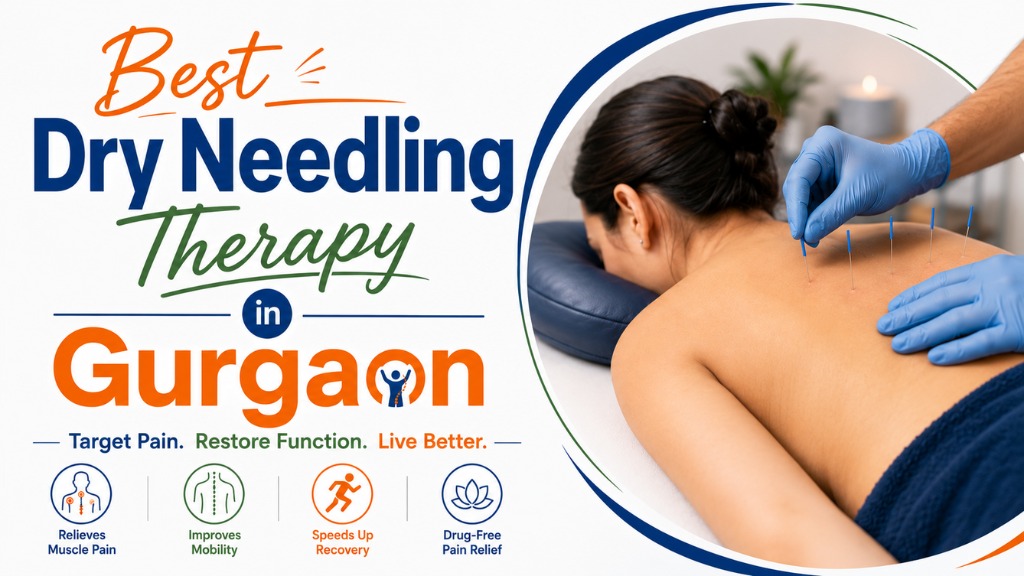
Dry needling is a physiotherapy technique that uses very thin sterile needles to target tight muscle bands, often called trigger points.
These trigger points are small areas within a muscle that can become tight, sensitive, and painful.
Sometimes they cause pain exactly where they are located.
Sometimes they cause pain somewhere else entirely.
For example, a trigger point in the shoulder may create discomfort that travels toward the neck or arm.
The goal of dry needling is to help release muscle tension, improve movement, and reduce pain associated with these tight areas.
Why Do Trigger Points Develop?
Muscles go through stress every day.
Long desk hours, poor posture, repetitive movements, sports activities, lifting heavy objects, and even emotional stress can contribute to muscle tightness.
Common causes include:
- prolonged sitting
- computer work
- sports injuries
- repetitive strain
- poor posture
- neck and back stress
- lack of physical activity
Over time, some muscles remain tight for so long that they stop functioning efficiently.
That is often when discomfort begins.
What Conditions May Benefit from Dry Needling?
Dry needling is commonly used as part of physiotherapy treatment for:
Neck Pain
Many office workers experience neck stiffness from spending long hours in front of screens.
Trigger points in the neck and upper back muscles often contribute to this problem.
Shoulder Pain
Shoulder tightness and restricted movement are common reasons people seek dry needling therapy.
Back Pain
Muscle tension in the lower back can affect movement, posture, and daily comfort.
Sports Injuries
Athletes often develop muscle tightness due to repetitive training and overuse.
Tennis Elbow
Some patients with tennis elbow experience muscle tightness in the forearm that may respond well to dry needling as part of a broader rehabilitation program.
Headaches Related to Muscle Tension
Certain tension headaches may be linked to tight muscles around the neck and shoulders.
What Happens During a Dry Needling Session?
This is probably one of the most common questions people ask.
The session usually begins with an assessment.
A physiotherapist examines:
- posture
- movement restrictions
- painful areas
- muscle tightness
- trigger points
Once the affected muscles are identified, very thin needles are inserted into specific trigger points.
Most patients describe the sensation differently.
Some feel almost nothing.
Some experience a brief muscle twitch.
Others notice mild discomfort for a few seconds.
The procedure usually takes only a short amount of time.
Does Dry Needling Hurt?
This varies from person to person.
Many patients are surprised that the needles are much thinner than they expected.
Some people feel:
- a slight prick
- a brief twitch response
- temporary soreness afterward
Usually, any soreness settles within a day or two.
Why Dry Needling Is Often Combined with Physiotherapy
This is an important point.
Dry needling is rarely used as a standalone solution.
Most physiotherapists combine it with:
- stretching
- strengthening exercises
- posture correction
- mobility training
- movement rehabilitation
Why?
Because muscle pain often has an underlying cause.
The trigger point may be the result of poor posture, weak muscles, movement habits, or repetitive stress.
Addressing only the trigger point may not be enough.
What Does Research Say?
Dry needling has been studied extensively for musculoskeletal pain.
A 2023 review published in the Journal of Clinical Medicine reported that dry needling may help reduce pain intensity and improve function in certain patients with myofascial pain and movement-related conditions when combined with rehabilitation strategies.
Researchers continue studying its long-term effectiveness across different conditions, but many physiotherapists now include it as part of broader rehabilitation programs.
Who Usually Chooses Dry Needling Therapy?
People often consider dry needling when they experience:
- recurring neck pain
- chronic shoulder tightness
- persistent back discomfort
- sports-related muscle issues
- movement restrictions
- trigger point pain
Not everyone requires dry needling.
A proper assessment usually helps determine whether it is suitable for a particular condition.
Why More People in Gurgaon Are Exploring Dry Needling Therapy
Gurgaon has a large working population.
Long commutes, desk-based jobs, extended screen time, and reduced physical activity contribute to muscle tension for many people.
Because of this, physiotherapy treatments focused on movement restoration and muscle release have become increasingly popular.
Many patients are looking beyond temporary pain relief and focusing more on improving mobility and long-term function.
Best Dry Needling Therapy in Gurgaon
We at Dr. Rajiv Physiotherapy Clinic, dry needling therapy is used as part of a broader physiotherapy and rehabilitation approach. Treatment plans are based on individual assessment, movement patterns, muscle condition, and recovery goals rather than following a one-size-fits-all approach.
The focus remains on helping patients improve mobility, reduce muscle tightness, and return to daily activities more comfortably through evidence-based physiotherapy care.
Summary
Dry needling therapy is not a magic fix.
But for many people dealing with muscle tightness, trigger points, restricted movement, and recurring discomfort, it can become a useful part of the rehabilitation process.
The key is proper assessment, correct technique, and combining it with movement-based physiotherapy.
Because lasting improvement usually comes from addressing not just the painful muscle, but also the reason that muscle became painful in the first place.