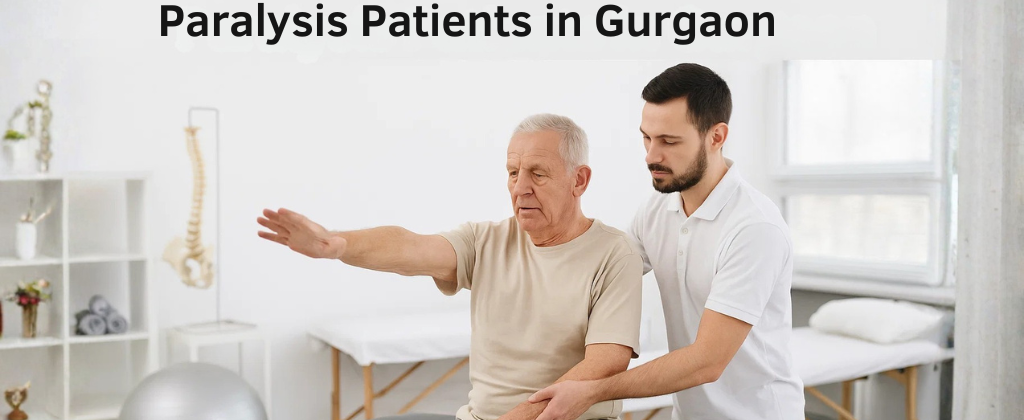
The recovery after stroke or paralysis may not occur in one go. It is a gradual process. There’s a bit more balance today. A little more grip for tomorrow. For families and patients, the changes might seem minor, but they are more than they seem.
Paralysis and strokes affect how the body communicates with the body. The movements that were once performed without thinking are now requiring effort, direction and patience. Physiotherapy plays an important role in re-establishing that connection.
When the body forgets familiar movement
After a stroke brain is unable to transmit the muscles with clear messages. Some muscles tighten. Others are inflexible. Balance is a challenge. When paralysis is present, whether it’s total or partial the disturbance could get more extreme, however the issue is the same that movement is no longer governed by instinct.
If therapy is not guided the body adjusts in ways that are not helpful. Joints become stiff. Muscles shorten. Weakness increases quietly. Physiotherapy helps to stop this process in the early stages.
The timing of the event is more important than intensity
Many families believe that recovery should be delayed for a time until the patient “feels more energized.” However early physiotherapy is focused on positioning, safety, and gentle activation not the use of force.
The early sessions can help:
- Maintain joint mobility
- Reduce stiffness
- Improve circulation
- Be aware of your movement patterns and prevent poor habits.
This early guidance can make the later recovery easier and easier to control.
What is the focus of physiotherapy after a stroke or paralysis
The treatment of physiotherapy following neurological injuries is about retraining, not rush.
Sessions can begin with simple objectives. Balance and sitting. In bed, turning. Standing with assistance. Gradually, the therapy moves to the shifting of weight guided walking and posture adjustment.
The strength will come later, and is layered with care. Training for balance reduces the risk of falling. Stretching reduces the tightness of muscles. Breathing and endurance are also important in the long run, particularly for long-term independence.
Each plan is modified as progress occurs. There are no two patients who move in the identical way.
Therapy at home or in clinics What is the best option?
For many people suffering from strokes and paralysis traveling can be exhausting or dangerous. Home physiotherapy can be used to treat patients in the comfort of a home environment, using real-world surfaces, chairs and walking areas. It can improve confidence and carries over into daily life.
Clinic sessions are helpful in situations where the patient is able to safely travel and requires equipment or additional space. Both strategies work if they are they are consistently supervised. The importance of consistency is greater than the location.
How experience can make a difference in the field of neuro physiotherapy
Rehabilitation for neurologic disorders requires a lot of judgment. Insufficient effort could increase spasticity. Too little delays progress. An experienced physiotherapist knows the delicate balances of these muscles and can adjust the treatment routinely.
We at Dr. Rajiv Physiotherapy Clinic, stroke and paralysis rehabilitation is offered for patients throughout Palam Vihar, Sector 90 and adjacent regions of Gurgaon. Treatment is organized with a patient-friendly approach and is realist, focusing on safety and improvement over time.
What should families be aware of about recovery
The process of recovery is rarely in a straight line. Positive days are often later followed by slower days. It doesn’t mean that the therapy is not working. small gains like improved sitting, more comfortable transfer, less stiffnessis a sign of progress.
Family involvement can aid in recovery as it helps to maintain independence instead of taking away it. The physiotherapy process often involves guiding caregivers on how to handle themselves safely and encouraging them.
Recovery is slow however, it does move
The profession of physiotherapy cannot guarantee an instant cure. It provides guidance. In time, patients usually improve their control and confidence throughout their daily lives.
Progress may be quiet. But the numbers add to.